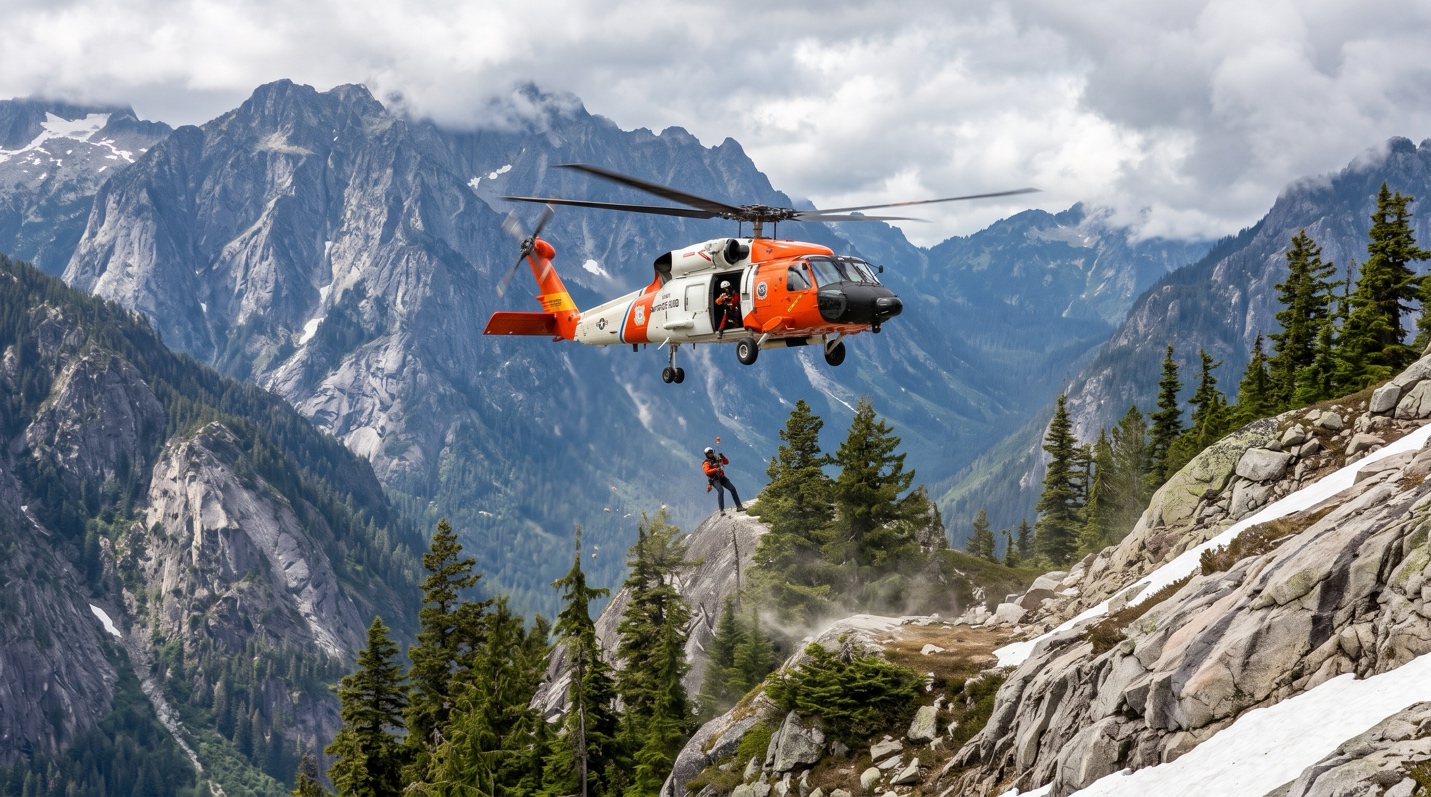
Insertion, packaging and extraction of injured hikers when the aircraft cannot land is one of the most complicated technical rescues. Updrafts, trees and elevation are all factors.
Patient Scenario
1500 on a Saturday in late October and a hiker, unfamiliar with the terrain wandered off trail and fell 40 feet off a rock band below a popular summit trail in the Adirondacks of Northern New York. The hiker is lying on a ledge about the width of a pickup truck bed. The ranger ground team was able to reach the hiker after a 90-minute climb. Your patient is alert, guarding his chest with an obviously deformed lower leg and a deep scalp laceration that has bled through his jacket and hood. The trail out of the area is four miles of switchbacks, two of them exposed to scrambling. If they choose a litter carry it will take six hours, eight if the weather turns as darkness settles in in about an hour.
The ranger, also a paramedic evaluates the situation; fracture femur, rib fractures, a long carry, falling temperatures and a crew that will likely be exhausted before even getting back to the trail. Making the judgement call he keys the radio and requests a hoist-capable aircraft with a stokes basket.
So begins what is arguably the most technically demanding operation in prehospital care. This article walks through it from the medic’s pint of view: when a hoist or short-haul extraction makes sense, how insertion works, what has to happen medically before the patient leaves the ground, what the evidence actually says about harness suspension, and what the ground provider can do to make the whole thing safer and faster.